




Parita Parmar
Rankings are a lagging indicator. By the time a page visibly moves up or down in search results, the signals that actually caused it often changed weeks earlier. That lag is exactly why so many teams misdiagnose what's working and what isn't — they're reacting to old news.
Metrics worth watching
Core Web Vitals, crawl frequency, indexed page count, and click-through rate on your existing rankings all tell you more about where things are heading than a single day's position tracker. We've had clients panic over a two-spot ranking drop while ignoring a slow, steady decline in click-through rate on their top page for three months straight — the second one was the actual problem.
Page experience signals — load speed, layout stability, whether the mobile version is genuinely usable and not just technically responsive — increasingly separate the pages that rank from the ones that merely get indexed and forgotten on page four. We treat these as leading indicators worth checking monthly, not quarterly, because they tend to move before rankings do, not after.
Content decay is underrated
Older content quietly loses rankings as competitors publish fresher material, even if nothing about your page technically changed. We audit client blogs roughly once a quarter, and it's rarely the newest posts that need attention — it's the two-year-old article that used to rank top three and has been sliding, unnoticed, for months.
A quarterly refresh cycle — updating stats, tightening the intro, adding a section that answers a question people are now actually asking — recovers more traffic, in our experience, than most net-new content efforts. It's less exciting to plan than a new campaign. It also tends to work better, mostly because you're improving a page that already has backlinks and search history behind it instead of starting from zero authority.
A simple way to prioritize what to refresh
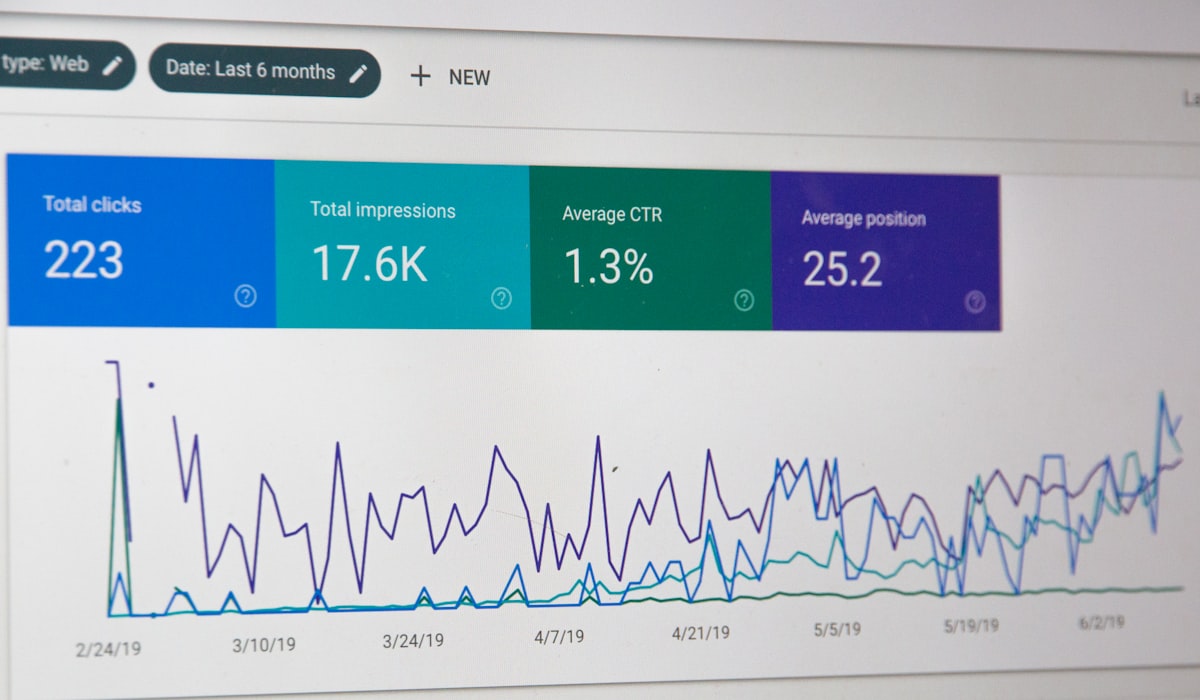
Not every aging page is worth the effort. We rank candidates by a rough formula: pages that used to rank in the top five and have dropped, cross-referenced against pages that still get meaningful impressions in Search Console even at a lower position. A page with high impressions and a mediocre click-through rate is usually a title-and-description fix. A page with dropping impressions and dropping position usually needs a real content overhaul, not a cosmetic one.
- Pull the last 12 months of Search Console data and sort by impressions with a declining trendline.
- Check whether competitors ranking above you have published something newer covering the same query.
- Rewrite the intro and update any stat or year reference before touching the rest of the page.
- Add one new section answering a question that's showing up in 'People Also Ask' but isn't covered yet.
- Re-submit the URL for indexing rather than waiting for the next crawl to happen naturally.
Why position tracking alone misleads teams
A single keyword's position can bounce five or six spots day to day for reasons that have nothing to do with your page — a competitor running a temporary promotion, a seasonal spike in a news-adjacent query, even Google testing a layout variant in certain regions. Teams that react to every daily fluctuation end up making changes based on noise, and that's often more damaging than doing nothing, because it obscures whether a real change actually worked.
We recommend looking at rolling 30-day averages for anything decision-driving, and reserving daily tracking for a genuine algorithm update or a page you just changed on purpose. Patience isn't a virtue in SEO reporting — it's a measurement requirement, because the lag between cause and visible effect is simply how the system works.
Building the habit into a real workflow
None of this works as a one-off audit. We set a recurring calendar block — the same week every quarter — specifically for the content refresh review, separate from whatever net-new content is being planned that month. Teams that treat refresh work as something to get to 'when there's time' consistently deprioritize it in favor of anything with a launch date attached, and the two-year-old article keeps sliding, unnoticed, for another quarter.
We also keep a simple spreadsheet tracking every refreshed page's position and impressions for the three months before and after the update. It's a small amount of overhead that pays for itself the first time a stakeholder asks whether the refresh work is actually worth the time — the before-and-after numbers answer that question far more convincingly than an opinion would.
How this changes reporting to stakeholders
Explaining lagging indicators to a stakeholder who wants a simple weekly ranking update is its own communication challenge, and we've found the fix isn't more data — it's a different framing. Instead of reporting a single ranking number, we report a small dashboard of leading and lagging indicators side by side, with a short note on which ones are expected to move first. That framing has done more to reduce panic over normal short-term fluctuation than any amount of raw data ever did on its own, because it sets the right expectation about timing before the fluctuation happens rather than explaining it away after the fact.
Tools worth the setup time
A short list of tools has consistently paid for the setup effort on client accounts: Search Console for the ground-truth impression and click data no third-party tool replicates as accurately, a crawler for catching structural issues at scale, and a rank tracker limited to a manageable set of priority keywords rather than an unwieldy list that generates more noise than signal. Beyond that core set, additional tooling tends to add reporting complexity without adding proportional insight, and we'd rather a client team deeply understand three data sources than skim ten.
A closing word on patience
Clients new to this way of measuring SEO often want a definitive answer within the first month about whether a change worked, and the honest answer is usually that a month isn't enough time for the lagging indicators to catch up to the leading ones. We've found it worth setting that expectation explicitly at the start of an engagement — naming the typical lag window for the specific changes being made — so a quiet first month reads as expected, not as evidence the work isn't paying off.