




Balkrushn Koladiya
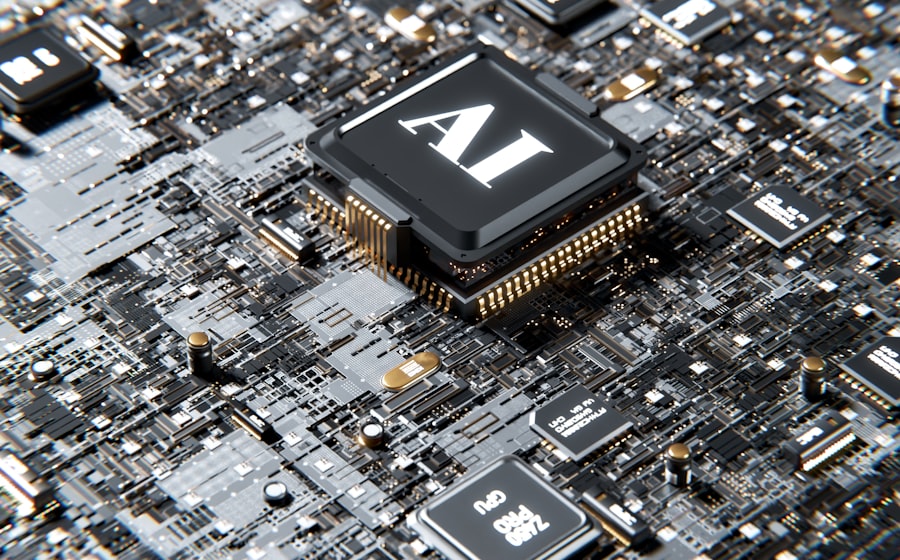
AI's impact on software development has moved well past autocomplete. It's changing how teams plan, build, test, and maintain custom software, and the change happened faster than most predictions from even two years ago suggested it would.
Augmenting, not replacing, developers
The biggest wins come from AI handling repetitive work — boilerplate code, test generation, documentation nobody enjoys writing — so engineers can spend more time on architecture and product decisions that actually require human judgment and context the AI doesn't have.
Smarter QA and fewer regressions
AI-assisted testing tools can generate edge cases developers wouldn't think to write manually at 5pm on a Friday, and flag likely regressions before code even reaches a human reviewer's queue.
Teams that integrate this thoughtfully into their workflow are shipping faster without sacrificing code quality, in our own experience running projects this way. But it still requires experienced engineers to review and guide the output — the tools accelerate good judgment, they don't replace the need for it.
Where AI tooling still needs a careful hand
The failure mode we see most often isn't AI writing bad code — modern tools are generally competent at producing something that runs. It's teams accepting output without understanding why it works, which turns into a maintenance problem months later when nobody on the team can confidently explain a piece of the system because nobody actually wrote or reviewed it carefully in the first place. We treat AI-generated code the same way we'd treat a contribution from a new team member: useful, often correct, and always reviewed against the same standard as everything else in the codebase.
- Use AI for the first draft of boilerplate, tests, and documentation, not for architectural decisions.
- Review generated code against the same standards you'd apply to a human pull request — no exceptions for speed.
- Keep a human owner accountable for every merged change, regardless of how it was drafted.
- Track where AI-assisted code introduces subtle bugs over time, and adjust which tasks you delegate to it accordingly.
What's actually changing in how teams plan work
Beyond the code itself, AI tooling is changing how project timelines get estimated. Tasks that used to require a day of writing repetitive integration code now take an hour, which shifts the bottleneck further upstream to requirements clarity and design decisions — the parts of a project that were always the actual hard part, just previously hidden behind the time it took to type everything out.
That shift has a real implication for how projects get scoped: teams that used to pad estimates for implementation time now need to spend that recovered time on getting requirements right up front, because a fast, confident implementation of the wrong feature is still the wrong feature, just built faster. The technology changed. The discipline of figuring out what to build in the first place didn't, and arguably matters more now than it did before.
Setting realistic expectations with clients
Some of the more difficult client conversations recently have been about expectations set by AI marketing rather than by anything the tooling actually delivers. A client hearing that AI can 'build an app in a weekend' arrives with a timeline that doesn't match what a properly reviewed, production-ready build actually requires, even with every available tool accelerating the boilerplate. We've found it worth being explicit early about which parts of a project genuinely speed up and which parts — requirements clarity, architectural decisions, security review — remain exactly as time-consuming as they always were, regardless of how fast the code itself gets written.
Keeping institutional knowledge intact as tooling changes
A risk that gets less attention than it deserves is what happens to a team's collective understanding of its own codebase as more of it gets AI-assisted. If nobody on the team deeply understands a meaningful portion of the system because it was generated and merged quickly, that knowledge gap becomes a real liability the first time something breaks in production at 2am and nobody can reason confidently about why. We treat code comprehension, not just code correctness, as something worth actively protecting — rotating review responsibilities and requiring a plain-language explanation alongside any nontrivial AI-assisted change, so the understanding stays distributed across the team rather than concentrated nowhere at all.
How this shifts what junior developers need to learn
As AI tooling absorbs more of the repetitive implementation work junior developers traditionally used to build fluency, the skills that actually matter for a junior hire shift toward reading and evaluating code critically rather than just producing it quickly. We've adjusted how we mentor newer engineers accordingly — more time spent on code review and architectural reasoning earlier in their growth, less time spent purely on typing speed and syntax familiarity, since the tooling increasingly handles the latter well enough on its own.
Where the productivity gains actually show up in a project
The time savings from AI-assisted development tend to concentrate heavily in the early and middle stages of a project — scaffolding, initial implementation, first-pass testing — and much less in the final stretch, where the remaining work is disproportionately judgment calls, edge cases, and integration issues that require genuine understanding of the specific system rather than pattern-matched code generation. Clients expecting the same acceleration rate to hold through the entire project timeline are often surprised when the final weeks don't compress the way the earlier ones did, and we try to set that expectation clearly at the start rather than let it become a mid-project disappointment.
The teams adapting best to this shift aren't the ones adopting every new AI tool immediately. They're the ones being deliberate about which parts of their workflow actually benefit from acceleration, and protecting the parts — architectural judgment, security review, genuine understanding of the system — where speed was never really the bottleneck in the first place.
The honest summary, after several years of watching this play out across dozens of projects, is that AI tooling has made good developers meaningfully faster without making the underlying discipline of software engineering any less necessary. If anything, it's raised the bar for what good judgment is worth, since the mechanical work around it got cheaper.