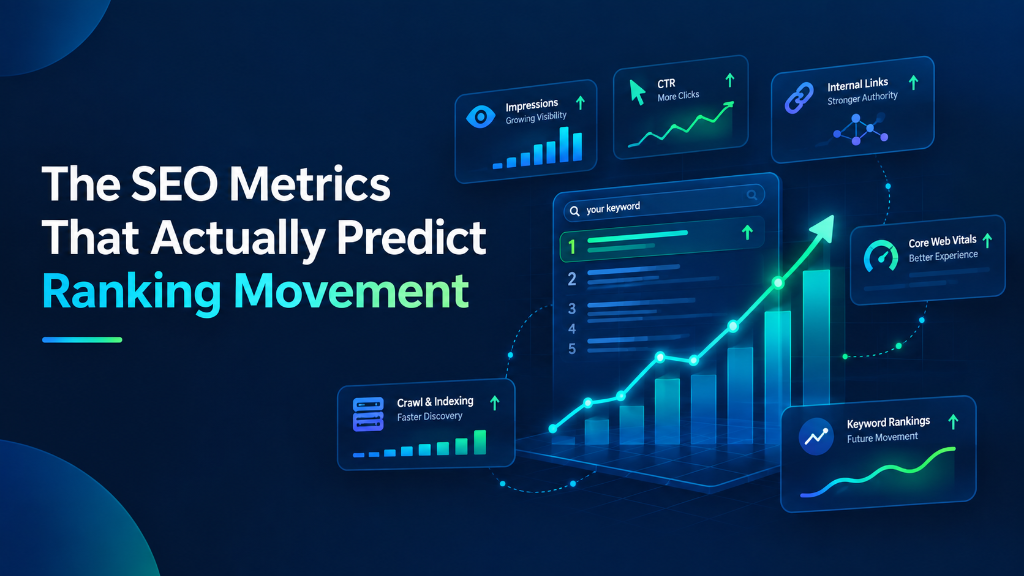





SEO data can help explain how people discover a website, which pages receive organic traffic, and where search performance may need attention. But a collection of impressive-looking statistics does not automatically produce a better SEO strategy. The useful question is not simply how large a search metric is, but what the data means for a particular website, audience, and business goal.
This guide explains which SEO metrics are worth monitoring, how to interpret them, and how to avoid making decisions from isolated numbers.
Why SEO Statistics Need Context
SEO statistics often describe large groups of websites, search results, or users. Your website may behave very differently from that broader population.
A metric can therefore be useful for understanding a general trend without being a reliable prediction for an individual website.
For example, a change in search impressions may indicate greater visibility, but impressions alone do not tell you whether visitors found the right page, completed an important action, or became customers.
Use industry statistics as context. Use your own search performance data to make website-specific decisions.
1. Organic Search Visibility
Search visibility describes how often a website or page appears in search results for relevant queries. It is one of the first areas to examine when evaluating organic search performance.
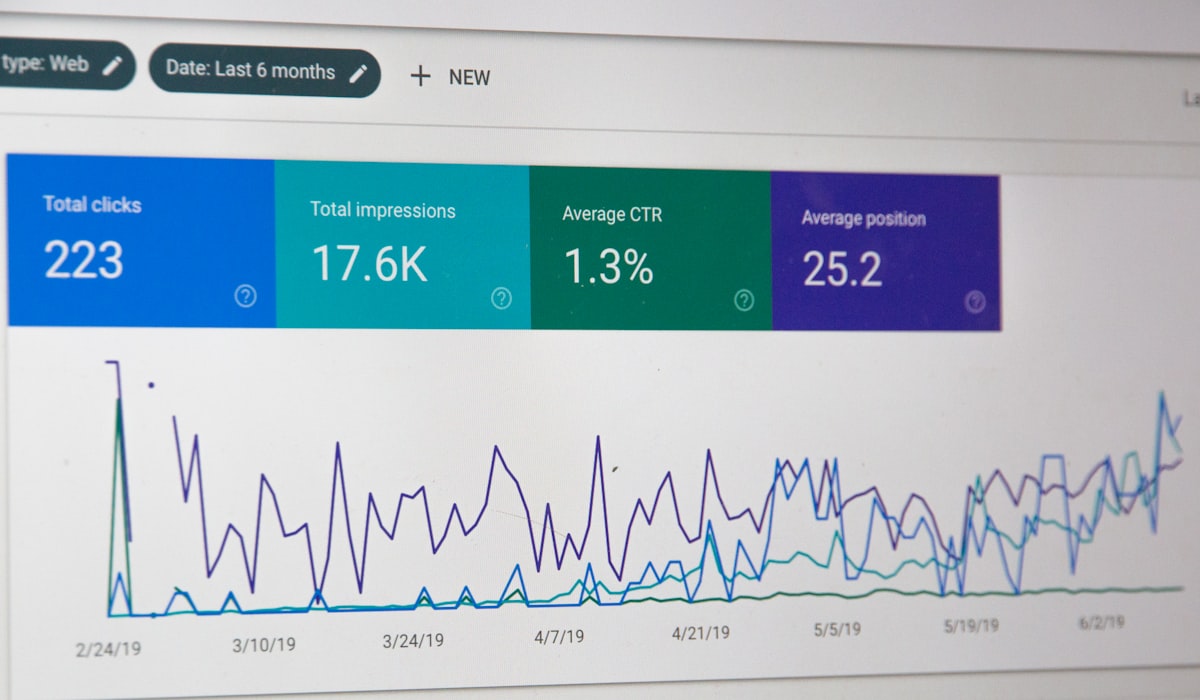
Google Search Console provides performance data such as impressions, clicks, click-through rate, and average position for eligible search results.
These metrics should be examined together rather than treated as independent success measurements.
| Metric | What It Can Tell You | What It Does Not Tell You Alone |
|---|---|---|
| Impressions | How often results were shown | Whether visitors engaged or converted |
| Clicks | How many visits came from search results | Whether those visits were valuable |
| CTR | Relationship between impressions and clicks | Whether the resulting traffic met the business goal |
| Average position | Approximate search-result position in the reported data | Exact ranking for every user and query |
2. Search Impressions Can Reveal Growing Visibility
An increase in impressions can mean that pages are appearing for more searches or appearing more frequently for searches already associated with the site.
However, more impressions are not automatically better.
If impressions increase because a page is appearing for irrelevant queries, the number may rise without creating useful business traffic.
Review the queries and pages generating impressions before deciding what the change means.
3. Clicks Are More Useful When Connected to Intent
Organic clicks represent visits generated from search results, but the value of those visits depends on search intent.
A page that receives clicks for informational queries may support awareness, while another page may target visitors who are comparing services or preparing to make a purchase.
Instead of asking only, “Did clicks increase?”, ask:
- Which queries generated the clicks?
- Which pages received the traffic?
- Did the queries match the page's purpose?
- Did visitors continue into important parts of the website?
- Did organic traffic contribute to a meaningful business action?
4. CTR Needs to Be Interpreted Carefully
Click-through rate can help identify situations where a page receives visibility but attracts fewer clicks than expected.
CTR can vary substantially depending on the query, search intent, device, search feature, brand recognition, and position of the result.
A low CTR therefore does not automatically mean that a title or description is poor.
Use CTR as a diagnostic signal. Compare similar queries and pages, inspect the actual search intent, and look for patterns before changing page titles or other search-result elements.
5. Average Position Is Not a Universal Ranking Number
Average position is useful for analyzing search performance in Search Console, but it should not be treated as a permanent ranking for a page.
Search results can vary based on query, device, location, search features, and other circumstances.
For this reason, tracking broad patterns in your own Search Console data is generally more useful than repeatedly checking a single query and treating one observed position as a fixed value.
6. Search Intent Matters More Than Raw Traffic
SEO traffic becomes more useful when the content satisfies the reason behind the search.
Common search intents include:
- Learning about a topic
- Finding a specific website or service
- Comparing possible solutions
- Evaluating a product or service
- Taking an action such as contacting a business or making a purchase
A page should have a clear purpose that matches the needs of its intended visitors.
High traffic to a page that does not satisfy its audience may be less useful than a smaller amount of highly relevant traffic.
7. Long-Tail Queries Can Reveal Specific Needs
Longer and more specific search queries can reveal detailed questions and use cases.
Instead of looking only at broad keywords, review the actual queries associated with your pages. These queries can expose terminology, questions, problems, and expectations that can improve future content.
This can also help identify opportunities for new pages when an important topic is not adequately covered by existing content.
8. Content Quality Is Not Measured by Word Count Alone
Longer content is not automatically more useful content.
A strong article should provide enough information to address its intended topic without adding unnecessary repetition simply to increase its length.
When reviewing content, consider:
- Does the article answer the main question?
- Does it provide practical information?
- Are important claims supported by appropriate sources?
- Is the structure easy to scan?
- Does it avoid unnecessary repetition?
- Does it provide information that is useful for the intended audience?
9. Freshness Should Match the Topic
Some topics naturally change over time. Search guidance, software capabilities, regulations, product specifications, and statistics can become outdated.
Other subjects may remain useful for much longer.
Do not update an article simply because it has an old publication date. Review whether the information is still accurate and useful for the reader.
When a page depends on changing information, record the sources and review the article periodically.
10. Core Web Vitals Are Part of the Broader Page Experience
Website performance should be considered alongside content and usability rather than treated as a replacement for them.
Google's Core Web Vitals focus on loading performance, responsiveness, and visual stability through metrics including Largest Contentful Paint, Interaction to Next Paint, and Cumulative Layout Shift.
Performance data can help identify pages where users may experience slow loading, delayed interaction, or unexpected layout movement.
Use field data and appropriate diagnostic tools to understand real performance instead of assuming that a single laboratory test represents every visitor.
11. Mobile Experience Still Matters
Visitors may access the same content from phones, tablets, and desktop devices. A page that works well on one screen size can still create problems on another.
Review navigation, text readability, forms, buttons, tables, images, and interactive elements on smaller screens.
Mobile usability should be part of normal content and website quality reviews rather than a one-time task.
12. Internal Links Help Connect Related Content
Internal linking can help users move between related pages and can help search engines understand relationships between pages on a website.
Useful internal links should provide genuine value to the reader.
Instead of adding links simply to increase the number of links on a page, connect related topics where the next page gives the visitor useful additional information.
13. External Sources Can Strengthen Evidence-Based Content
When an article discusses standards, technical guidance, regulations, research, or changing platform requirements, linking to authoritative sources gives readers a way to verify important information.
Good sources depend on the subject. They may include official documentation, standards organizations, government agencies, research organizations, or established technical documentation.
External references should support the article rather than exist only as decoration.
14. Search Data Can Help Find Content Gaps
Search performance data can reveal questions that existing pages only partially address.
For example, if a page receives impressions for several related queries but does not directly answer an important question, that pattern may indicate an opportunity to improve the page.
Before creating another article, check whether the existing page can be improved. Creating multiple pages for nearly identical search intent can make a website's content less focused.
15. Avoid Making Decisions From One SEO Metric
SEO performance is multidimensional.
A traffic increase may happen while conversion quality decreases. A ranking improvement may happen while impressions fall. A CTR change may occur because the search-result environment changed.
Look at several related signals before deciding whether a change is meaningful.
| Question | Useful Data to Review |
|---|---|
| Are pages becoming more visible? | Impressions and query coverage |
| Are visitors reaching the site? | Organic clicks and sessions |
| Are search results attracting clicks? | CTR with query and position context |
| Is traffic relevant? | Landing pages and search intent |
| Is organic traffic valuable? | Relevant conversions and business outcomes |
| Are pages technically usable? | Performance, mobile, accessibility, and technical diagnostics |
16. Build an SEO Measurement Routine
SEO becomes easier to manage when measurement is consistent.
A practical routine can include:
- Review organic search performance regularly.
- Identify meaningful changes rather than reacting to every small fluctuation.
- Review the queries and pages behind major changes.
- Check whether search intent matches the content.
- Investigate technical issues affecting important pages.
- Review pages that are gaining or losing visibility.
- Improve content where the available evidence indicates a real need.
- Record significant changes so later performance can be interpreted correctly.
17. What SEO Statistics Should You Actually Track?
The most useful metrics depend on your website's purpose.
A service business may care about qualified organic enquiries. A publisher may focus more heavily on engaged readership and returning visitors. An ecommerce website may examine organic landing pages alongside product discovery and completed transactions.
Choose measurements that connect search visibility with the actual purpose of the website.
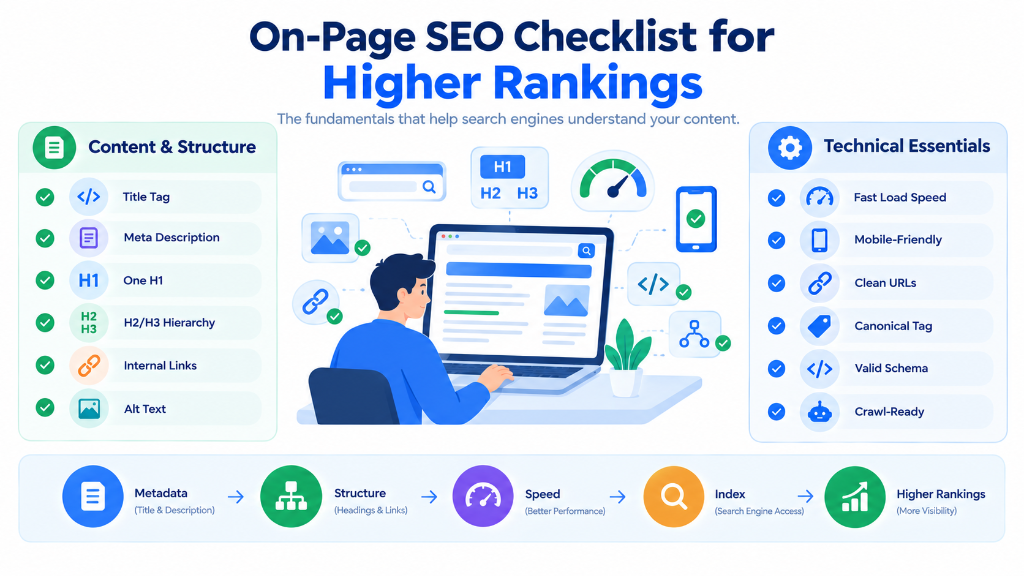
Practical SEO Data Review Checklist
Use this checklist when reviewing your organic search performance:
- Identify the main business or user goal for the website.
- Review organic impressions over an appropriate time period.
- Review organic clicks for the same period.
- Check CTR alongside queries and positions.
- Review the pages receiving organic visibility.
- Inspect the queries associated with important pages.
- Check whether search intent matches each page.
- Identify pages gaining visibility and investigate why.
- Identify pages losing visibility and investigate before making changes.
- Review important content for outdated information.
- Check whether important claims have appropriate sources.
- Review internal links between closely related pages.
- Check mobile usability on important pages.
- Review Core Web Vitals and other relevant performance diagnostics.
- Connect organic traffic analysis with meaningful website outcomes.
- Document major SEO changes and review their results over time.
How to Use SEO Statistics Without Misleading Yourself
SEO statistics are most useful when they answer a specific question.
Instead of collecting dozens of numbers, start with the problem you are trying to understand. Then choose the smallest set of measurements that can provide useful evidence.
For example, if organic traffic falls, investigate which pages and queries changed before deciding what action to take. If impressions rise but clicks do not, examine query intent, search-result context, and page relevance before assuming that the website has a content problem.
This approach turns SEO reporting from a collection of numbers into a process for making evidence-based improvements.